STOIC PHILOSOPHY BOOK GUIDE
The 5 Best Stoicism Books (2026)
— a reading order from modern intro to Marcus, Seneca & Epictetus
Anxiety, anger, other people's opinions, events that refuse to go your way — Stoicism has been a practical answer to exactly those problems for two thousand years. The core is startlingly simple: separate what is up to you from what is not, and pour your effort only into the first — the "dichotomy of control" that Epictetus taught. Ancient wisdom for a modern mind. This page is where you choose the first book that puts it to work. The short answer: do not start with the originals. From modern practical intros to the primary texts — Marcus Aurelius's Meditations, Seneca, Epictetus — here are five books in an order that actually works.
We run author-by-author and theme-by-theme bookshelves with one rule: never let a reader be defeated by a philosophy book. When you want to widen out from Stoicism to Western philosophy in general, our general Philosophy Bookshelf (in Japanese) picks up the thread.
Our RankingRANKING
The editorial order. If you can't decide, start at #1. Check prices and availability on the Amazon product pages.
-
1
 If in doubt, start hereBeginnerKindle
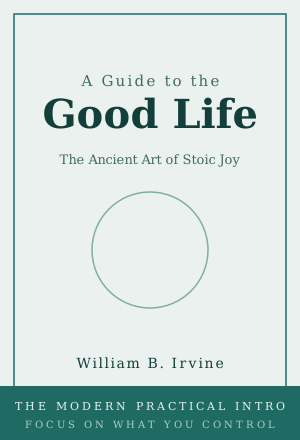
A Guide to the Good Life: The Ancient Art of Stoic Joy
A philosophy professor rebuilds Stoicism into a program you can run: negative visualization, the dichotomy of control, and a case that the goal is not grim endurance but tranquility and joy. The rare intro that hands you techniques to try the same day — and makes you want the originals.
Check price & availability on Amazon / Kindle edition available
View on Amazon Read on Kindle Read our review -
2
 BeginnerKindle
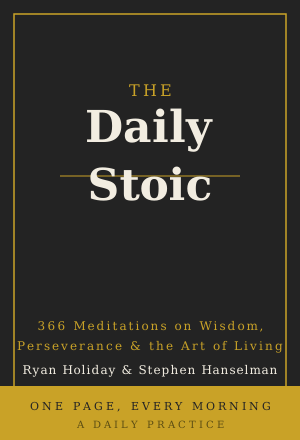
The Daily Stoic
366 short meditations — one for each morning — pairing a translated line from Marcus, Seneca or Epictetus with a page of modern commentary, arranged by theme. A daily practice rather than a systematic intro. The easiest way to make Stoicism a habit instead of a one-time read.
Check price & availability on Amazon / Kindle edition available
View on Amazon Read on Kindle Read our review -
3
 IntermediateKindle
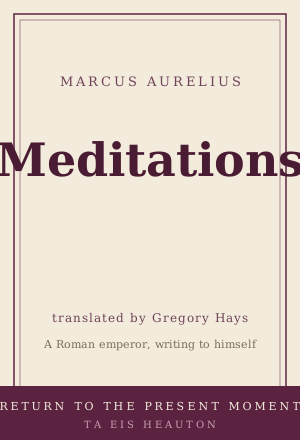
Meditations
A Roman emperor's private notebook, written to no one but himself. Stay in the present; correct your own judgment, not other people's — because it was never meant to be published, the practice of Stoicism is here at its most unguarded. The first original to open, in Gregory Hays's clear modern prose.
Check price & availability on Amazon / Kindle edition available
View on Amazon Read on Kindle Read our review -
4
 IntermediateKindle
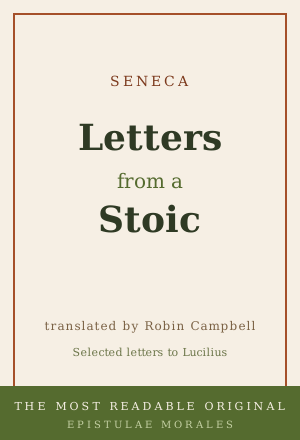
Letters from a Stoic
Stoicism as personal correspondence: Seneca's letters to a friend, on time, wealth, fear and how to live. A primary text that reads like warm, quotable prose — the most approachable of the originals. "We suffer more in imagination than in reality," and much else you will underline.
Check price & availability on Amazon / Kindle edition available
View on Amazon Read on Kindle Read our review -
5
 AdvancedKindle
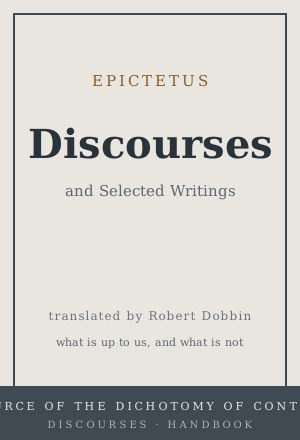
Discourses and Selected Writings
The former slave whose lectures gave Stoicism the dichotomy of control — the source everything else on this shelf flows back to. Recorded by a student, blunt and demanding. A substantial read, but for anyone who has climbed the earlier steps, this is where the practice runs deepest.
Check price & availability on Amazon / Kindle edition available
View on Amazon Read on Kindle Read our review
The 5 Books at a GlanceCOMPARE
The biggest fear in choosing a Stoicism book is "will I stall if I start with the originals?" Choose by difficulty and character.
| Title | Difficulty | Length | Type | Best for | Links |
|---|---|---|---|---|---|
| A Guide to the Good LifeWilliam B. Irvine · Oxford UP | Beginner ★☆☆ | ~320 pp. ~6 hrs |
Modern practical intro | You want techniques to use starting today | View on Amazon Review |
| The Daily StoicHoliday & Hanselman · Portfolio | Beginner ★☆☆ | 416 pp. 1 page/day |
Daily-practice intro | You want a habit, not a one-time read | View on Amazon Review |
| MeditationsMarcus Aurelius, tr. Hays · Modern Library | Intermediate ★★☆ | ~256 pp. ~6 hrs |
Original (emperor's notebook) | You want a practitioner's own words | View on Amazon Review |
| Letters from a StoicSeneca, tr. Campbell · Penguin Classics | Intermediate ★★☆ | ~256 pp. ~5 hrs |
Original (selected letters) | You want the most readable of the originals | View on Amazon Review |
| Discourses and Selected WritingsEpictetus, tr. Dobbin · Penguin Classics | Advanced ★★★ | ~304 pp. ~10 hrs |
Original (lecture notes + Handbook) | You want the source of the whole tradition | View on Amazon Review |
A Reading Order That Won't Defeat YouROADMAP
There is essentially one reason people give up on Stoicism: they start with the originals. Open Meditations or Epictetus without the framework behind them and they look like scattered aphorisms. Take a modern map first, then the emperor's notebook, then the source texts. Climb in three steps.
-
STEP 1 ── Get the framework (one book)
Let a modern intro put the dichotomy of control in your bones
Start with Irvine's A Guide to the Good Life for the core skill — telling "up to me" from "not up to me" — and the concrete techniques that go with it. If you would rather build the habit a page at a time, The Daily Stoic works just as well as an entry point. Get the framework in, and the originals suddenly become readable.
A Guide to the Good Life on AmazonThe Daily Stoic on Amazon -
STEP 2 ── The emperor's notebook (book two)
Read Meditations — a practitioner's own words
With the framework in place, the first original to open is Marcus Aurelius's Meditations. Because the emperor wrote it only for himself, there is no performance in it — you see exactly how the ideas from Step 1 were actually used. Don't read it cover to cover; keep it by the bed and take a passage at a time.
Meditations on AmazonMeditations on Kindle -
STEP 3 ── The source texts (the goal)
Seneca and Epictetus, down to the source
If the emperor's words land, go to their source. Seneca's Letters from a Stoic is the easy next step — a primary text that reads like a friend's correspondence. Then Epictetus's Discourses, where the dichotomy of control began. By now Stoicism is no longer an aphorism collection but a tool you use. When you want to widen out to Western philosophy as a whole, our general Philosophy Bookshelf (in Japanese) takes over.
Letters from a Stoic on AmazonEpictetus on Amazon
How We ChoseCRITERIA
Four criteria. First, currently in print and actually available on amazon.com — every title has a live product page from an established publisher (Oxford, Portfolio, Modern Library, Penguin). Second, the ladder must hold: modern intro → emperor's notebook → source texts, each step preparing the next. Third, you actually touch the core — the dichotomy of control, negative visualization, memento mori, the present moment — rather than reading about Stoicism from a distance. Fourth, honesty about what each book is: a practical intro, a daily reader, an emperor's private notes, selected letters, recorded lectures — and each review says so, with its limits. Difficulty ratings are the editorial room's own, not reproduced Amazon reviews; the basis for each judgement is stated in that review's editorial notes.
Still Undecided? Take This OneCONCLUSION
If you have read this far and still can't choose, the answer is settled: start with Irvine's A Guide to the Good Life. It takes the heart of Stoicism, ties it to modern worries, and even builds the bridge to the originals — the entry point with the fewest ways to fail. Master one attitude — focus on what you can control — and everything after it, Meditations and Epictetus included, is on your side.
Check price & availability on the Amazon product pages