Home › Top 5 › The Daily Stoic
Review: The Daily Stoic — Stoicism a page at a time, every morning
★★★★☆3.9 / 5.0 (editorial rating)
Verdict: the intro that turns Stoicism into a daily habit. 366 short entries — one for each morning — each built from a translated line of Marcus, Seneca or Epictetus and a page of plain modern commentary. Not a systematic introduction but a daily reader, and as a way to keep the practice going instead of reading about it once, nothing on this shelf is easier to stick with.
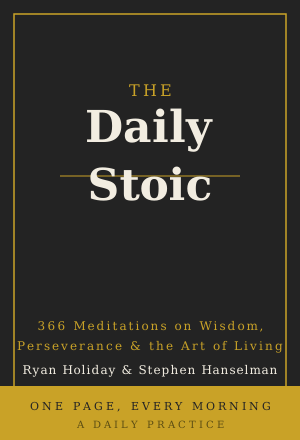
- Title
- The Daily Stoic: 366 Meditations on Wisdom, Perseverance, and the Art of Living
- Authors
- Ryan Holiday & Stephen Hanselman (Hanselman also provides the translations)
- Publisher
- Portfolio / Penguin
- Type
- Daily-practice intro (one entry per day)
- Difficulty
- Beginner ★☆☆ — no prior knowledge, read one page a day
Check price & availability on the Amazon product page
What it is — in three lines
Ryan Holiday is a bestselling writer who has done more than almost anyone to carry Stoicism to a modern audience of entrepreneurs, athletes and general readers; Stephen Hanselman supplies fresh translations from the Greek and Latin. The book gives you a passage and a short reflection for every day of the year, grouped into monthly themes — the discipline of perception, of action, of will. It is built to be used at the pace of a life, not finished in a weekend.
The core — turning a philosophy into a routine
The premise is that Stoicism was always meant to be practiced daily, the way Marcus practiced it in his notebook, and that a modern reader needs the same rhythm. So instead of an argument to follow, you get a small, repeatable ritual: read one short ancient line, read one page on what it might mean today, carry it into the hours ahead. Over a year the themes cycle back — the dichotomy of control, mortality, the present moment — until they stop being ideas you read and become defaults you reach for.
That makes this the book for people who bounce off long-form philosophy but will keep a bedside or desk habit. If what has defeated you before is not the ideas but the staying power, the daily form is the fix.
Three highlights
1. Real source lines, freshly translated
Each entry opens on an actual passage from Marcus, Seneca, Epictetus and other Stoics, in Hanselman's own translations. You are meeting the primary voices in small doses from day one — gentle preparation for reading them whole later.
2. Themed months, so it never feels random
The year is organized around the Stoic "disciplines," so the daily hits accumulate into a shape rather than scattering. Miss a few days and you can rejoin without losing the thread.
3. Designed as an on-ramp
Holiday openly plays guide toward the originals, sending interested readers on to Marcus, Seneca and Epictetus. Its whole shape — from a daily habit into the source texts — fits this site's reading order exactly.
What to watch out for
Two honest notes. First, this is a devotional daily reader with a self-improvement framing, not a scholarly introduction: the Stoic system (logic and physics included) and its intellectual history are largely absent, and the commentary leans toward productivity and resilience. Readers who want the nuance and shadow of the originals will find it thin. Second, because so much is pitched toward success and performance, the properly Stoic claim that virtue itself is the only good can get quietly recast in more useful, worldly terms. It is an excellent doorway, not a destination — treat the daily habit as the thing that carries you to Marcus and Epictetus, not as a substitute for them.
Check price & availability on the Amazon product page