FEMINISM BOOK GUIDE
The 5 Best Feminism Books to Start With (2026)
— in a reading order that won't defeat you
Have you ever tried to understand feminism, opened a thick classic or landed in a fierce online argument, and quietly backed away? Feminism has a staircase you can actually climb. Start with a one-hour essay, see it as everyday politics, get two centuries of history in a slim overview, connect it to the present, and only then open the source, Simone de Beauvoir's The Second Sex. This shelf orders five books not by fame but by readability and role — a map so you don't get lost.
The editorial room behind this site runs a family of philosopher bookshelves and a section-by-section reading archive of the primary texts (in Japanese). This shelf is a broad-topic guide, not a manifesto: it aims to hand you the shared ground of history and concepts first, and every review is honest about what each book is — an essay, a primer, an overview, or a demanding classic.
Our RankingRANKING
The editorial order. If you can't decide, start at #1. Check prices and availability on the Amazon product pages.
-
1
 If in doubt, start hereBeginner
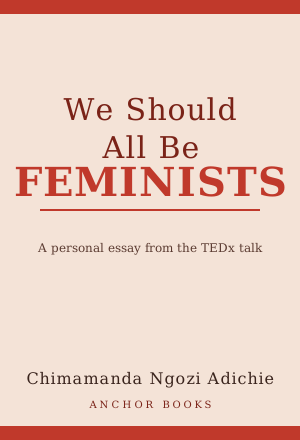
We Should All Be Feminists
The single best doorway: a warm, precise essay — adapted from a TEDx talk watched by millions — that defines feminism for the twenty-first century in about an hour. Before any thick classic or heated argument, this is the page that puts a clear idea in your hands and makes the word feel like an invitation rather than a battle line.
Check price & availability on Amazon / Kindle edition available
View on Amazon Read on Kindle Read our review -
2
 Beginner
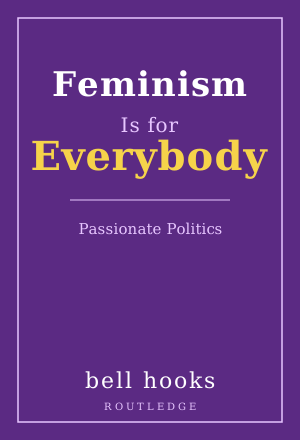
Feminism Is for Everybody: Passionate Politics
Once the word makes sense, hooks makes it personal. In short, plain-spoken chapters she walks through work, love, class, race, and the body, showing that "feminism is a movement to end sexism, sexist exploitation, and oppression" — something that touches everyone's life. The accessible primer that turns a definition into lived politics.
Check price & availability on Amazon / Kindle edition available
View on Amazon Read on Kindle Read our review -
3
 Intermediate
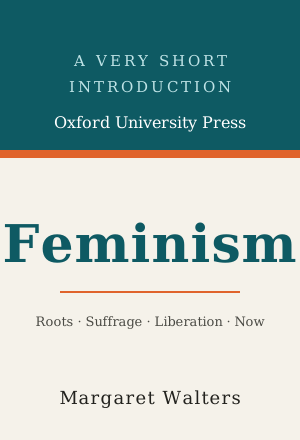
Feminism: A Very Short Introduction
Now for the map. Walters traces feminism from its earliest roots through the fight for the vote and the liberation of the 1960s to the present, in a compact, well-sourced overview. Reading it after the two essays gives every name and slogan a place on a timeline, so later debates stop feeling like a shouting match with no context.
Check price & availability on Amazon / Kindle edition available
View on Amazon Read on Kindle Read our review -
4
 Intermediate
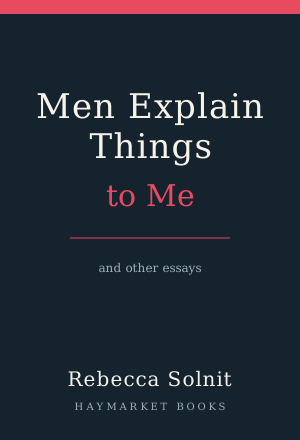
Men Explain Things to Me
History connects to the present here. The title essay — which put the idea behind "mansplaining" into wide circulation — opens a short, sharp collection on voice, silence, and violence against women. With the timeline in hand, Solnit lets you name what is happening in the news and around you right now, in the #MeToo era and after.
Check price & availability on Amazon / Kindle edition available
View on Amazon Read on Kindle Read our review -
5
 Advanced (the source)
The Second Sex
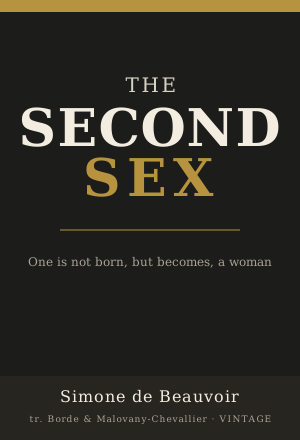
"One is not born, but rather becomes, a woman." The 1949 book that set the course of twentieth-century feminism, in the first complete, unabridged English translation. Nearly every book above traces back to this one; after the four steps below, you can read the source itself — argument by argument — instead of taking it on trust.
Check price & availability on Amazon / Kindle edition available
View on Amazon Read on Kindle Read our review
The 5 Books at a GlanceCOMPARE
The biggest worry with a topic this large is "is this too heavy for me?" Choose by difficulty and format.
| Title | Difficulty | Length | Type | Best for | Links |
|---|---|---|---|---|---|
| We Should All Be FeministsAdichie · Anchor Books | Beginner ★☆☆ | ~64 pp. ~1 hr |
Essay (from a TEDx talk) | First contact; you want one clear idea, fast | View on Amazon Review |
| Feminism Is for Everybodybell hooks · Routledge | Beginner ★☆☆ | ~124 pp. ~2 hrs |
Accessible primer | You want feminism as everyday, lived politics | View on Amazon Review |
| Feminism: A Very Short IntroductionWalters · OUP | Intermediate ★★☆ | ~160 pp. ~4 hrs |
Scholarly introduction (history) | You want two centuries of history on one timeline | View on Amazon Review |
| Men Explain Things to MeSolnit · Haymarket | Intermediate ★★☆ | ~176 pp. ~4 hrs |
Essay collection (contemporary) | You want to connect the history to the present | View on Amazon Review |
| The Second SexBeauvoir · Vintage (tr. Borde & Malovany-Chevallier) | Advanced ★★★ | ~832 pp. 3–4 weeks |
Primary source (the classic) | You want to read the source, argument by argument | View on Amazon Review |
A Reading Order That Won't Defeat YouROADMAP
People usually give up on feminism for two reasons: starting with the thick classic, or diving straight into a single furious argument. Overview → everyday politics → history and the present → the source. Climb in four steps.
-
STEP 1 ── Get the idea in an hour (book 1)
Read Adichie's We Should All Be Feminists
Before any classic, spend an hour with one clear, generous definition of what feminism is asking for. It fits in a single sitting, and it gives you the vocabulary and the frame you'll need for everything that follows. Skip this and the bigger books have nothing to hang on.
We Should All Be Feminists on Amazon -
STEP 2 ── Make it everyday politics (book 2)
Read bell hooks's Feminism Is for Everybody
Next, bring the idea down to daily life. hooks's short chapters on work, love, class, race, and the body show that feminism is not an abstraction but a set of questions about how people actually live together. It reads quickly and it makes the subject feel like yours.
Feminism Is for Everybody on Amazon -
STEP 3 ── History, then the present (books 3–4)
Walters's Very Short Introduction for the timeline, Solnit's Men Explain Things to Me for now
Put the movement on a timeline with Walters's compact history, then let Solnit connect that history to the present — voice, silence, and the everyday power dynamics you can suddenly name. Once the past and the present line up, the news and the arguments online fall into a much larger story.
Very Short Introduction on AmazonMen Explain Things to Me on Amazon -
STEP 4 ── Read the source (the goal)
Take on Beauvoir's The Second Sex
The book the four before it keep pointing back to. "One is not born, but rather becomes, a woman" — with the map, the everyday politics, and the history behind you, you can meet that sentence where it was written and feel why it was revolutionary. Read it slowly, in the complete translation, a chapter at a time.
The Second Sex on AmazonRead our review
How We ChoseCRITERIA
Four criteria. First, currently in print and actually available on amazon.com — every title has a live product page from an established publisher (Anchor, Routledge, Oxford University Press, Haymarket, Vintage), and The Second Sex is the complete, unabridged Borde & Malovany-Chevallier translation rather than the older abridged one. Second, the ladder must hold: essay → everyday primer → history → the present → the source, each step preparing the next. Third, balance over partisanship — feminism is a broad topic and a long movement, so this shelf hands you the shared ground of history and concepts first, rather than pushing one faction's line. Fourth, honesty about what each book is: an essay is a doorway, a primer is not the whole house, an overview compresses, and a 1949 classic carries the assumptions of its time. The reviews say so. The editorial room runs a family of philosopher bookshelves and a section-by-section archive of the primary texts (in Japanese); those first-hand readings are the foundation here. Commentary on living authors is limited to their published work.
Still Undecided? Take This OneCONCLUSION
If you have read this far and still can't choose, the answer is simple: buy We Should All Be Feminists. The real danger with a subject this big is touching a fierce argument before you have the whole picture, deciding it is "too much," and turning back. Spend an hour getting one clear idea, and the other four books stack easily on top of it. If you would rather start from lived, everyday politics, go instead to Feminism Is for Everybody.
Check price & availability on the Amazon product pages