BUDDHA BOOK GUIDE
The 5 Best Books on the Buddha (2026)
— early Buddhism, in reading order
You want to meet the Buddha in something close to his own words, not in a self-help paraphrase — and then you open a doorstop anthology of the Pali Canon, or a book thick with Sanskrit and doctrine, and quietly close it again. There is a gentler way in. Rather than diving straight into the discourses, start with a short scholarly overview, get the life and its setting, then read the teaching plainly stated — and only then go to the primary sources. This shelf is a map of five books arranged not by fame but by the order that actually gets you to the sources.
The editorial room behind this site runs a family of philosopher bookshelves and a section-by-section reading archive of primary texts. This is a religious and historical subject treated with a light hand: we present the books and the scholarship, we do not preach, and every page is honest about the one hard fact — the Buddha wrote nothing, and our earliest record of him was transmitted orally for generations before it was written down.
Our RankingRANKING
The editorial order. If you can't decide, start at #1. Check prices and availability on the Amazon product pages.
-
1
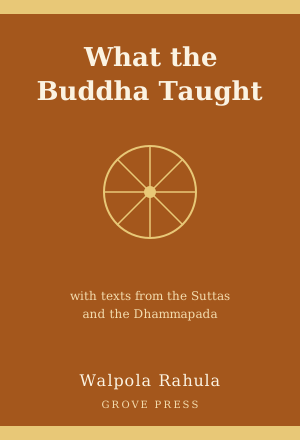 If in doubt, start hereBeginner–Intermediate
What the Buddha Taught
For more than sixty years, the single most recommended first book on the Buddha's teaching. A Sri Lankan monk-scholar sets out the core ideas — the four noble truths, no-self, the path — in clear prose, and appends a generous selection of texts from the Suttas and the Dhammapada in his own translation. Concise, authoritative, and grounded in the sources.
Check price & availability on Amazon / Kindle edition available
View on Amazon Read on Kindle Read our review -
2
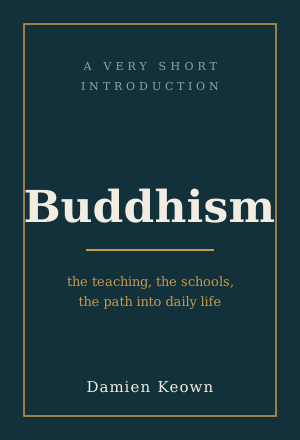 Beginner
Buddhism: A Very Short Introduction
The scholar's short map, before you commit to anything longer. Keown covers the Buddha, the four noble truths, karma and rebirth, meditation, the major schools, and Buddhism's spread and modern life — briskly and without jargon. The ideal place to get your bearings so the primary texts make sense when you reach them.
Check price & availability on Amazon / Kindle edition available
View on Amazon Read on Kindle Read our review -
3
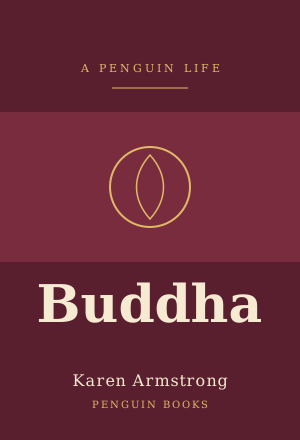 Beginner
Buddha (Penguin Lives)
A readable life of the Buddha by one of the best-known writers on religion. Armstrong sets Siddhartha Gautama against the spiritual ferment of sixth-century-BCE India and follows him from the palace to the awakening and the long teaching career — candid, throughout, that a documentary biography of the Buddha is impossible, and that she is reading a tradition. The human story that makes the teaching land.
Check price & availability on Amazon / Kindle edition available
View on Amazon Read on Kindle Read our review -
4
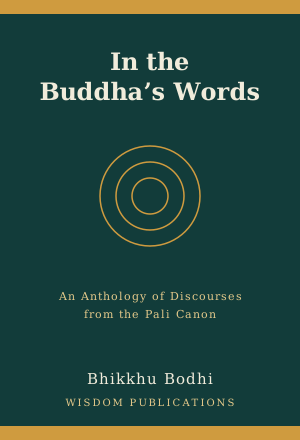 Intermediate
In the Buddha's Words: An Anthology of Discourses from the Pali Canon
The primary source, made navigable. The American monk and translator Bhikkhu Bodhi gathers discourses from the Pali Canon into ten themed chapters — from everyday ethics to renunciation and the path of insight — each opened by a clear introduction that tells you where you are and why it matters. The closest an English reader gets to reading the earliest record directly, with a guide.
Check price & availability on Amazon / Kindle edition available
View on Amazon Read on Kindle Read our review -
5
 Advanced
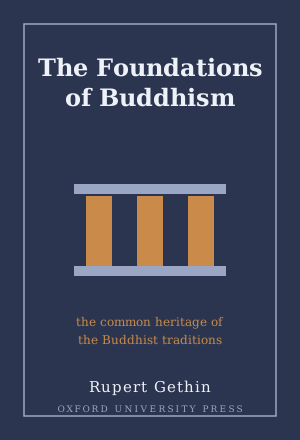
The Foundations of Buddhism
The scholarly synthesis, for when you want the whole structure. Gethin, an Oxford-published specialist in Indian Buddhism, sets out the ideas and practices common to the Theravada, Tibetan and East Asian traditions — the Buddha's story, the textual history, the four noble truths, karma and rebirth, the monastic and lay lives, and the bodhisattva path. The rigorous overview that puts everything you have read in its place.
Check price & availability on Amazon / Kindle edition available
View on Amazon Read on Kindle Read our review
The 5 Books at a GlanceCOMPARE
The usual worry with books on the Buddha is "introduction, or primary source?" Choose by difficulty and by what each book is for.
| Title | Difficulty | Length | Type | Best for | Links |
|---|---|---|---|---|---|
| What the Buddha TaughtWalpola Rahula · Grove Press | Beginner–Intermediate ★★☆ | ~151 pp. ~5 hrs |
Teaching + selected texts | You want the core doctrine, clearly, with sources | View on Amazon Review |
| Buddhism: A Very Short IntroductionDamien Keown · OUP | Beginner ★☆☆ | ~187 pp. ~4 hrs |
Scholarly introduction | You want the map before anything longer | View on Amazon Review |
| Buddha (Penguin Lives)Karen Armstrong · Penguin | Beginner ★☆☆ | ~240 pp. ~6 hrs |
Life / biography | You want the human story and its setting | View on Amazon Review |
| In the Buddha's WordsBhikkhu Bodhi · Wisdom | Intermediate ★★☆ | ~512 pp. 1–2 weeks |
Primary anthology (guided) | You want the Pali discourses, with a guide | View on Amazon Review |
| The Foundations of BuddhismRupert Gethin · OUP | Advanced ★★★ | ~352 pp. 2–3 weeks |
Scholarly synthesis | You want the whole structure, rigorously | View on Amazon Review |
A Reading Order That Won't Defeat YouROADMAP
Two things defeat most readers of the Buddha: diving into the primary sources cold, and mistaking the doctrines of a later school for the earliest teaching. The cure is order — overview, then the life, then the teaching plainly stated, then the sources. Climb in four steps.
-
STEP 1 ── Get your bearings (one short book)
Keown's Very Short Introduction for the map
Before any primary text, spend an afternoon with the scholar's overview: who the Buddha was, what the four noble truths claim, how karma and rebirth are meant, and how the traditions diverged. It is short, it is jargon-free, and it means nothing later will blindside you.
Very Short Introduction on Amazon -
STEP 2 ── Meet the man and the age (the life)
Read Armstrong's Buddha for the human story
The discourses were spoken to particular people in a particular world. Armstrong reconstructs that world — the renunciant movements of ancient India — and the arc of a life within it, so that when you meet the teaching you know whose voice it is and what it was answering.
Buddha (Armstrong) on Amazon -
STEP 3 ── Read the teaching (the core)
What the Buddha Taught — the doctrine, plainly stated
Now the heart of it. Rahula lays out the core teaching in clear prose and then hands you a selection of the actual texts, translated, at the back — so this one book is both explanation and first taste of the sources. Finish it and you have genuinely read what the Buddha taught, not a summary of a summary.
What the Buddha Taught on Amazon -
STEP 4 ── Go to the sources, and deepen (two books)
In the Buddha's Words → The Foundations of Buddhism
With the map in hand, read the primary discourses themselves in Bhikkhu Bodhi's guided anthology. Then let Gethin's Foundations place everything you have read inside the wider history and doctrine of the traditions. Reading the sources, and understanding how scholars frame them: hold both and this shelf has done its job.
In the Buddha's Words on AmazonThe Foundations of Buddhism on Amazon
How We ChoseCRITERIA
Three criteria. First, currently in print and actually available on amazon.com — every title has a live product page from an established publisher (Grove Press, Oxford University Press, Penguin, Wisdom Publications). Second, the ladder must hold: overview → life → core teaching → primary sources and synthesis, each step preparing the next, with an entry point at every height from a hundred-page introduction to a full annotated anthology. Third, a neutral, scholarly and respectful stance: this is a living religious tradition as well as a historical subject, so we present the books and the scholarship rather than promote a practice, and each review is honest about what its book is — an introduction, a life read from tradition, a doctrinal primer, a translated anthology, or an academic synthesis. The Buddha wrote nothing, and the earliest record was carried orally for generations; every page says so. The editorial room runs a family of philosopher bookshelves and a section-by-section archive of primary texts, and those first-hand readings are the foundation here.
Still Undecided? Take This OneCONCLUSION
If you have read this far and still can't choose, the answer is simple: buy What the Buddha Taught. For six decades it has been the standard first book for a reason — a hundred and fifty clear pages that state the core teaching honestly and then hand you a sheaf of the actual texts to read for yourself. It is explanation and primary source in one small volume. If you would rather get the lay of the land first, spend an afternoon with Keown's Very Short Introduction and come back.
Check price & availability on the Amazon product pages