Home › Top 5 › The Consolations of Philosophy
The Consolations of Philosophy review — philosophy as tools for living
★★★★☆4.2 / 5.0 (our rating)
Verdict: The book to start with if you want philosophy to be useful from day one. De Botton takes six philosophers and sets each against a specific everyday misery — unpopularity, poverty, frustration, inadequacy, heartbreak, difficulty — and shows the idea doing real work. It is philosophy as a medicine cabinet rather than a museum, and it's a genuine pleasure to read.
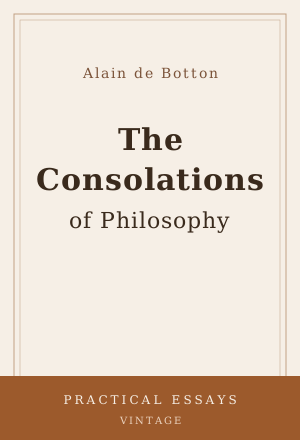
- Title
- The Consolations of Philosophy
- Author
- Alain de Botton
- Publisher
- Vintage
- Format
- 6 essays
- Difficulty
- Entry ★☆☆ — about 5 hours
Kindle edition available/prices and availability on Amazon
What it is — in three lines
Alain de Botton pairs six philosophers with six ordinary predicaments and shows how each thinker's ideas can actually help. First published in 2000 and adapted into a TV series, it's the book that launched de Botton's career as philosophy's most readable populariser. Short, elegant, and quietly serious under the charm.
The six consolations
Socrates — consolation for unpopularity. Epicurus — for not having enough money. Seneca — for frustration. Montaigne — for inadequacy. Schopenhauer — for a broken heart. Nietzsche — for difficulties.
——the book's six-part structure
The device is simple and it works: by anchoring each thinker to a felt problem, de Botton gives you a reason to care before the argument arrives. You meet Epicurus not as a name but as an answer to "why doesn't more money make me happier?", and Seneca as a coach for the moment the train is cancelled. It's the same "philosophy as a weapon for daily life" impulse that fuels the practical shelf everywhere — done with unusual grace.
Three things to look for
1. The Schopenhauer and Nietzsche chapters
The last two are the strongest — heartbreak read through Schopenhauer's pessimism, and difficulty through Nietzsche's "what does not kill me." If those click, our Schopenhauer and Nietzsche shops are the next step.
2. It's a gateway, not a summary
Each chapter is an invitation: read the essay, then go to the philosopher. Used that way, this is one of the most efficient on-ramps in the genre.
3. Prose you'll actually enjoy
De Botton writes like an essayist, not a lecturer. For a reader burned by dry textbooks, that alone can be the difference between finishing and quitting.
One caveat
This is a set of readings, not a system. De Botton selects what serves his theme, so a specialist would call the portraits partial — Nietzsche in particular is softened. Take it as a beautifully written invitation, not the last word on any of the six. For the rigorous treatment, that's what Think is for.
Prices and availability are on the Amazon product page.