Home › Top 5 › The Tyranny of Merit
Review: The Tyranny of Merit — is success really your own doing?
★★★★☆4.4 / 5.0 (editorial rating)
Verdict: the book where the theory of justice becomes most inescapably about you. Sandel argues that the very belief "my success is my own achievement" is corroding the common good — driving the winners to hubris and the rest to a justified resentment. Exams, degrees, the dignity of work: this is justice at its most personal, and it set off a large public argument.
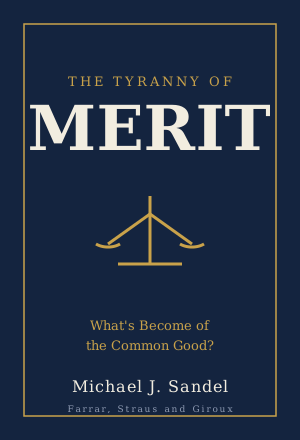
- Title
- The Tyranny of Merit: What's Become of the Common Good?
- Author
- Michael J. Sandel
- Publisher
- Farrar, Straus and Giroux (2020)
- Length
- ~288 pp. · 1–2 weeks
- Difficulty
- Intermediate ★★☆ — a contemporary argument
Check price & availability on the Amazon product page
What it is — in three lines
We tend to think a fair society is one where everyone can rise as far as their talent and effort take them — a meritocracy. Sandel argues that this ideal, however attractive, has curdled. When the successful come to believe their standing is entirely their own doing, they slide into hubris; and those left behind hear, in every celebration of merit, the message that their struggles are their own fault. The result, he contends, is a politics of grievance and a hollowed-out common good.
The core — the hidden cost of "you earned it"
The book's power is that it takes an idea almost everyone endorses — reward the deserving — and shows its underside. Sandel's key move is about the role of luck. Whether you were born with a marketable talent, into a family that could nurture it, in an era that happens to prize it — none of this is to your credit. Once you grant how much of "merit" is fortune, the confident line between the deserving and the undeserving blurs, and with it the moral licence the winners feel to keep their winnings. From there Sandel turns to the dignity of work and to a politics that has told too many people their worth depends on a diploma.
The relentless emphasis on rising by merit tells the winners they deserve their success — and tells everyone else they deserve their fate.
— editorial paraphrase of the book's central claim
Three highlights
1. Merit and luck, pulled apart
The clearest, most useful thread: how much of what we call desert is really the morally arbitrary luck of talent, upbringing and timing. It reframes arguments you thought you had settled.
2. Credentialism and its resentments
Sandel connects the worship of degrees to the populist backlash of recent politics — the sense, among those without them, of having been looked down on. Whether or not you buy the diagnosis, it is bracingly concrete.
3. The dignity of work and the common good
The constructive half: a case for valuing contribution over credential, and for a politics less about helping people climb the ladder and more about what we owe one another across it.
What to watch out for
Two notes. First, this is an argument, not a neutral survey. Sandel is making a case, and thoughtful critics have pushed back — that abandoning merit risks other injustices, or that his remedies are underspecified. Read it as a strong position to weigh, and hold on to the tools from Justice to weigh it. Second, it assumes you already grant that questions of desert are moral questions; if that framing is new, the earlier books on this shelf make it land harder.
Check price & availability on the Amazon product page