Home › Top 5 › The Analects (Lau)
Review: The Analects, tr. D. C. Lau — the standard first translation
★★★★★4.6 / 5.0 (editorial rating)
Verdict: the default first Analects, and rightly so. A clear, complete translation with an introduction that actually orients you — this is the version most readers meet Confucius in, and the one against which the others are best read. If you buy only one Analects, buy this one first.
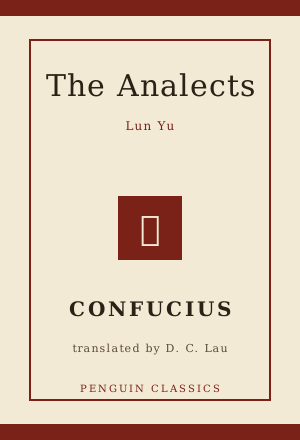
- Title
- The Analects (Penguin Classics)
- Author
- Confucius, tr. D. C. Lau
- Publisher
- Penguin Classics (original text compiled c. 5th–3rd century BC)
- Length
- Complete translation · ~250 pp. (introduction + 20 books)
- Difficulty
- Beginner ★☆☆ — plain prose, generous framing
Check price & availability on the Amazon product page
What it is — in three lines
The Analects (Lunyu, "Selected Sayings") is the record of Confucius's teaching: several hundred short passages — sayings, exchanges with disciples, brief scenes — compiled by his followers over the generations after his death around 479 BC. D. C. Lau, a distinguished translator of Chinese classics, renders the whole of it into clear modern English and prefaces it with a long introduction on Confucius's life, times and central ideas. It has been a standard classroom and general-reader edition for decades — the version people usually mean when they say "the Penguin Analects."
Why it can be your first Analects
The Analects is famously hard to enter cold, not because any single line is difficult but because it has no narrative and no argument that builds — just short, scattered sayings. What a first reader needs is therefore two things: prose clear enough to disappear, and enough framing to know what he or she is looking at. Lau supplies both. The translation is plain and careful rather than showy, and the introduction tells you who the recurring disciples are, what the key terms mean, and how to read a book that never explains itself. You come away with the whole text in your head and the sense of a coherent teaching underneath the fragments.
Is it not a pleasure, having learned something, to try it out at due intervals? Is it not a joy to have friends come from afar?
— Analects 1.1 (editorial gloss of the Chinese)
That opening line sets the tone of the whole book: learning as something practised, tested and enjoyed rather than merely stored. Read straight through, the recurring themes — ren (humaneness), li (ritual propriety), the junzi (the exemplary person) — begin to knit together on their own.
Three highlights
1. The introduction is half the value
Lau's essay is a compact education in early Confucianism: the historical Confucius, the disciples, the transmission of the text, and the meaning of the terms that every translation has to wrestle with. For a first reader, it does the work that would otherwise take a separate secondary book.
2. Restraint in the translation
Lau resists the temptation to smooth or modernise Confucius into a self-help sage. The English stays close and sober, which means the strangeness of a genuinely ancient ethical vision survives the crossing rather than being tidied away.
3. The whole book, in one sitting's worth of evenings
At around 250 pages including apparatus, the complete Analects is shorter than most people expect. You can read all twenty books in a handful of evenings and own the entire text — the necessary base for everything else on this shelf.
Do not impose on others what you yourself do not desire.
— Analects 15.24 (editorial gloss of the Chinese)
What to watch out for
Two honest notes. First — and this governs the whole site — this is one translation among many. Lau's clarity comes from choices; another translator will render the same key terms differently, and part of understanding the Analects is seeing that (which is exactly why the Ames & Rosemont version sits at the end of this shelf). Second, Lau's edition is deliberately spare on line-by-line commentary: it gives you the text and a strong introduction, but not a note under every passage. If you would rather have running explanation as you read, Annping Chin's translation or Slingerland's annotated edition fills that gap.
Check price & availability on the Amazon product page