Home › Top 5 › Analytic Philosophy: An Anthology
Review: Analytic Philosophy: An Anthology — the landmark papers in one volume
★★★★☆4.4 / 5.0 (editorial rating)
Verdict: the moment you stop reading about analytic philosophy and start reading it. Russell's "On Denoting," Quine's "Two Dogmas of Empiricism," Kripke's "Naming and Necessity" — the essays that actually moved the field, gathered and organised by topic. Not a book to read cover to cover but a shelf to live with; the single best-value way to own the primary sources.
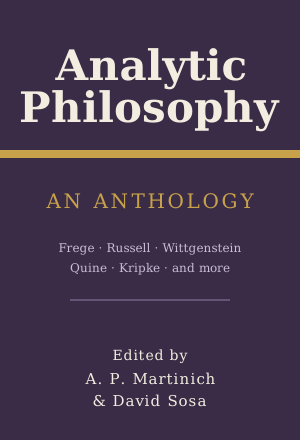
- Title
- Analytic Philosophy: An Anthology (2nd edition)
- Editors
- A. P. Martinich & David Sosa
- Publisher
- Wiley-Blackwell (Blackwell Philosophy Anthologies)
- Length
- Anthology of papers · ~800 pp.
- Difficulty
- Advanced ★★★ — primary papers, read selectively
Check price & availability on the Amazon product page
What it is — in three lines
Edited by A. P. Martinich and David Sosa, both of the University of Texas at Austin, this Blackwell anthology gathers the most influential essays of the last hundred years of analytic philosophy into a single volume, arranged by theme — language, mind, metaphysics, epistemology, ethics. The second edition adds several chapters to an already canonical selection. It is the primary sources themselves, curated and put in your hands.
The core — read the papers, not the summaries
Introductions can only take you so far. At some point you have to read "On Denoting" in Russell's own words, "Two Dogmas of Empiricism" as Quine actually argued it, "Naming and Necessity" as Kripke delivered it — because the arguments live in their detail, and every paraphrase quietly loses something. This anthology removes the biggest obstacle to that: it saves you from hunting down thirty separate papers across journals and out-of-print collections.
To read the tradition's landmark essays in the original is to trade a tour guide's summary for the country itself.
— The Analytic Philosophy Bookshelf, on why anthologies matter
Organised by topic rather than chronology, it also lets you follow a single debate — reference, or the analytic/synthetic distinction — across decades and rival hands.
Three highlights
1. The canon, in one place
Frege, Russell, Moore, Wittgenstein, Carnap, Quine, Davidson, Kripke, Putnam and more, without a library card. The convenience is not trivial — it is the difference between meaning to read the primary sources and actually doing it.
2. Organised by problem
Grouping the essays by theme turns the book into a set of ready-made syllabi: pick "philosophy of language" and read the key moves in sequence. Ideal for self-study.
3. Editorial framing
The editors' apparatus situates each cluster of papers, so you always know why a given essay was a turning point before you step into its argument.
What to watch out for
Two honest notes. First, this is not a book you read front to back, and it is not for beginners: the papers are demanding primary texts, which is exactly why it sits at Step 2 on this shelf, after the introductions have given you the map. Treat it as a reference to raid, not a novel to finish. Second, an anthology is a big-ticket academic volume; check the current price and, if the cost is steep, remember that many of these classic essays can be tracked down individually — the anthology's value is the curation and the convenience of having them together.
Check price & availability on the Amazon product page